
In the highly competitive electrical industry, manufacturers face a constant dual challenge. They must reduce material costs without compromising strictly regulated safety standards.
The price volatility of polymer resins often squeezes profit margins. This drives R&D engineers to search for highly efficient functional fillers.
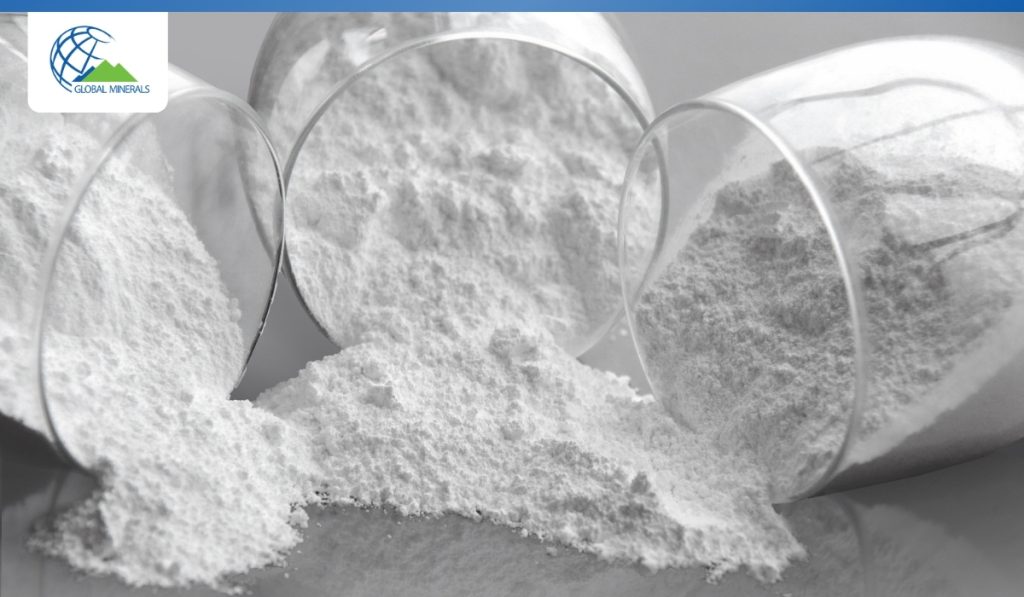
Calcium carbonate is already a standard functional filler in paints and plastics. In wire and cable compounds, the requirements on purity and particle control are tighter.
Global Minerals examines how grade selection affects your extrusion process.
1. The Role of Coated Minerals in Cable Compounds
For these applications, untreated limestone powder often creates problems. Untreated particles possess high surface energy, leading to poor dispersion within the polymer matrix.
This results in clumping, voids, and visible surface defects in the extruded compound.
At Global Minerals, our grades are surface-treated with stearic acid, which supports:
- Better dispersion: The stearic acid coating improves compatibility with the polymer matrix in PVC and filler masterbatch compounds.
- Surface finish: Consistent dispersion reduces agglomerates, which supports a smooth, glossy surface during high-speed extrusion.
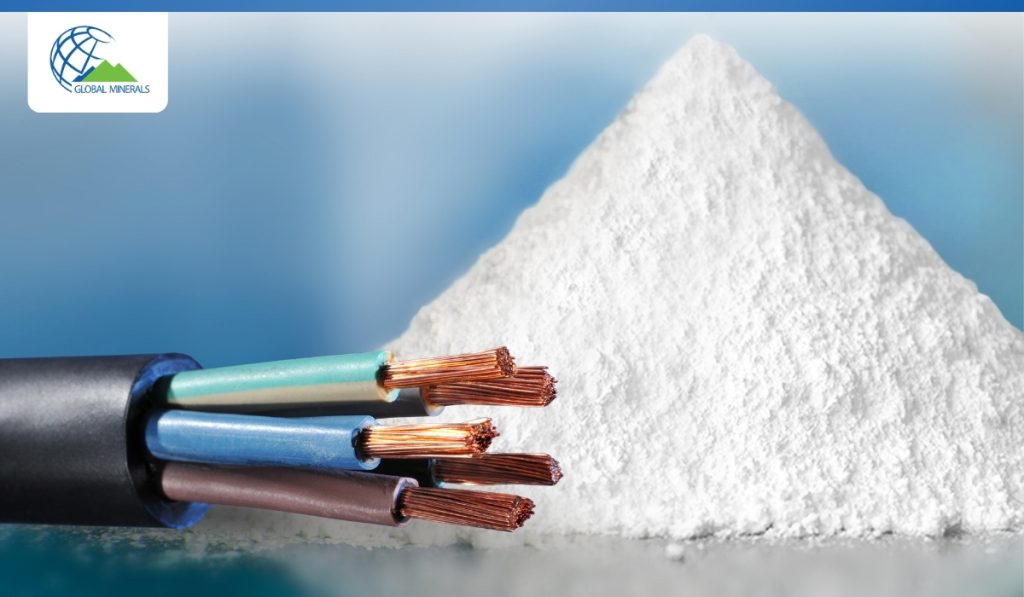
2. Cost Considerations: The Mathematics of Resin Replacement
The core economical reason for incorporating functional fillers is pure cost optimization. In PVC formulations, calcium carbonate is used as a functional filler to reduce the share of virgin resin in the compound.
However, the cheapest filler is not always the lowest total cost. If a low-quality filler is used, manufacturers must add expensive impact modifiers to compensate for poor dispersion.
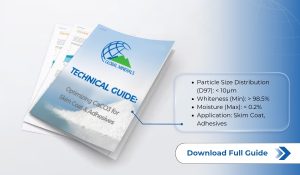
Real cost optimization is achieved by using a precisely engineered, functional filler. Our grades are produced to a consistent particle size specification, so loading levels can be set against a stable input.
3. Strategic Considerations for Buyers: Moisture and Consistency
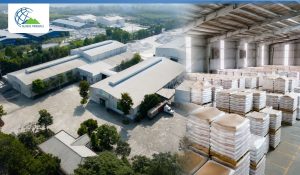
When R&D engineers specify high-quality materials, Procurement Managers must find a reliable supply partner. As a CaCO3 powder manufacturer in Vietnam, Global Minerals sees two factors come up in every technical discussion.
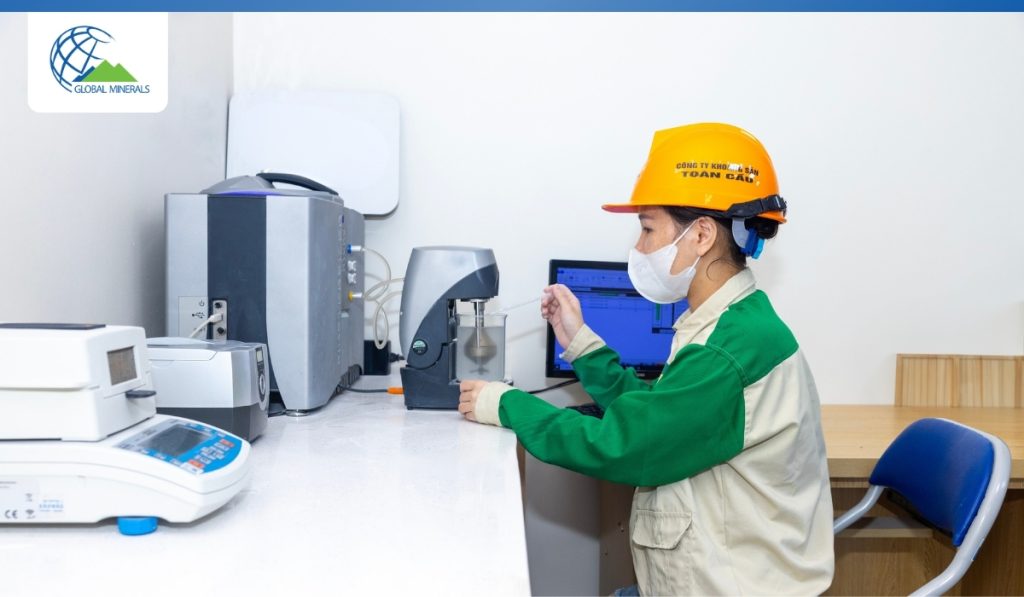
First, moisture. Moisture in the filler can generate gas bubbles and surface voids during extrusion, so it is one of the first things to check on any new material.
Our material goes through output QC before dispatch, and is packed in Jumbo bags, 25kg bags, or according to your specification. Second, consistency.
A compounded formula depends on a stable balance of inputs. If particle size shifts between batches, formulations have to be re-adjusted. Our material is mined from limestone we own rather than traded from multiple sources, and output is checked by QC before dispatch — fewer variables reaching your line.
Conclusion: A Formula for Long-Term Success
Selecting the right grade of CaCO3 filler in wire & cable is a strategic formulation decision. While lower-grade fillers seem attractive, the hidden costs of process instability far outweigh the savings.
Working with a CaCO3 powder manufacturer in Vietnam like Global Minerals, you get a consistent input to build the formulation around, and a clear cost position.
Our technical team is ready to collaborate on your specific compound formulas. Connect with us at via WhatsApp: +84 90 226 73 98 to request a sample and TDS.