
Calcium carbonate powder for paint has become an essential functional extender for manufacturers seeking to optimize Titanium Dioxide (TiO2) usage without compromising coating performance. Titanium Dioxide remains the undisputed champion of opacity and whiteness in the global coatings industry. However, its volatile pricing forces R&D engineers, formulators, and purchasing managers to constantly seek ways to optimize its usage and protect profit margins.
The most effective, industry-standard strategy is utilizing Calcium Carbonate (CaCO3) powder as a functional extender. But there is a critical challenge: choosing the wrong CaCO3 filler will immediately compromise your paint’s hiding power and film integrity. This leads to costly batch rejections or forces formulators to overcompensate by adding more TiO2—defeating the cost-saving purpose entirely.
To effectively reduce TiO2 without losing opacity, you must understand the exact mechanics of your filler.
1. How Calcium Carbonate Powder for Paint Works in Different Paint Systems
The physical type of paint—specifically the solvent base used—dictates how CaCO3 behaves within the formulation matrix.
In Water-Based Paints: Driven by strict Volatile Organic Compound (VOC) regulations, water-based coatings are the go-to solution for environmentally compliant, quick-drying interior applications. In these systems, when TiO2 particles clump together, their light-scattering efficiency drops dramatically. High-quality CaCO3 increases the effective distance between TiO2 particles, restoring their light-scattering efficiency and ensuring a clean, vibrant white base while maintaining the low-odor, eco-friendly nature of the paint.
In Solvent-Based Paints: Solvent-based paints utilize organic compounds to create a thick, hard, and highly durable finish designed to resist extreme weather, scratches, and abrasions. These are predominantly used for heavy-duty exterior coatings and industrial applications. Here, CaCO3 serves as a mechanical backbone. It builds the volumetric thickness required to hide wall imperfections while enhancing the paint’s resistance to environmental stress, without negatively reacting with the organic solvents.

2. The Three Decisive Metrics for Selecting CaCO3 Powder
Not all calcium carbonate powders are created equal. When selecting an extender to replace a portion of your TiO2, R&D engineers must rigorously evaluate three specific metrics:
A. Fineness and Top Cut (D97) The particle size distribution—specifically the Top Cut (D97)—dictates the dispersion quality of your paint. Precision-milled particles ensure seamless blending into the liquid matrix. If the powder is engineered with a tightly controlled D97, it guarantees optimal rheology, superior scrub resistance, and smooth leveling on the applied surface.
B. Whiteness and Brightness (Optical Purity) If your CaCO3 powder lacks optical purity, it will introduce a yellowish or grayish undertone to your paint base. To correct this color shift, formulators are forced to add more expensive TiO2, effectively erasing any cost savings. Utilizing a CaCO3 powder with exceptional, verified whiteness and brightness ensures the filler preserves optical clarity without dulling the base, maintaining the brilliant white finish of premium decorative paints.
C. Oil Absorption This is a critical metric often overlooked by procurement teams. High oil absorption means the CaCO3 powder will act like a sponge, soaking up your expensive binders and resins. This dramatically increases the viscosity of your paint and inflates your raw material costs. A high-quality CaCO3 filler must possess a controlled, optimized oil absorption rate, allowing you to maintain fluid dynamics and preserving your expensive resin for film formation.
Discover How we Innovate In Each Particle” with CaCO3 Powder!

3. Navigating Filler Loading Ratios: There Is No Universal Number
When virgin resin or TiO2 prices spike, the immediate reflex is to increase the CaCO3 loading ratio. However, the logic of “the more you load, the more you save” only works until your paint film fails.
It is crucial to understand that there is no universal loading number that applies to every formulation. The optimal ratio depends entirely on the specific paint system, the Critical Pigment Volume Concentration (CPVC), and the quality of the CaCO3 used:
- Decorative Water-Based Paints (Primers and Mattes): These systems generally tolerate higher loading ranges, sometimes pushing between 20% to over 40%, provided the CaCO3 has a controlled particle size that doesn’t disrupt the water-resin matrix.
- High-Gloss and Solvent-Based Enamels: Because these paints require a perfectly smooth, mirror-like finish and robust weatherability, the filler loading is typically kept much lower (often between 5% to 15%). Overloading these systems will instantly kill the surface gloss and compromise the protective barrier.
The exact ratio you can achieve safely is dictated by how stable your CaCO3 powder is from batch to batch.
4. Common Formulation Defects and Their Root Causes
Pushing your loading limits with unverified, inconsistent filler will quickly lead to visible coating defects. If you are experiencing these issues, your CaCO3 powder is likely the culprit:
- Surface Craters and Film Porosity: This defect is a direct result of inconsistent particle sizing. When oversized, coarse particles (an uncontrolled D97) are mixed into the coating, they protrude through the drying paint film, creating tiny craters and structural weaknesses.
- Agglomeration and Textural Inconsistency: If your paint suffers from poor dispersion and clustering inside the can, it is usually caused by a combination of irregular fineness and incompatible oil absorption. The powder fails to wet out properly in the solvent or water, agglomerating into stubborn clusters that ruin the application process.

5. Conclusion: Verify Before You Formulate
The chemistry of paint formulation leaves no room for guesswork. While utilizing CaCO3 is the most proven method to optimize TiO2 consumption and reduce costs, it requires a highly consistent, precision-milled functional filler.
Before committing to a new raw material or locking in a higher loading ratio, always run comprehensive trials on your specific formulation.
At Global Minerals, we supply strictly controlled CaCO3 powder engineered for both water-based and solvent-based coating systems. We provide the stable foundation you need to safely maximize your filler limits without sacrificing mechanical integrity or optical excellence.
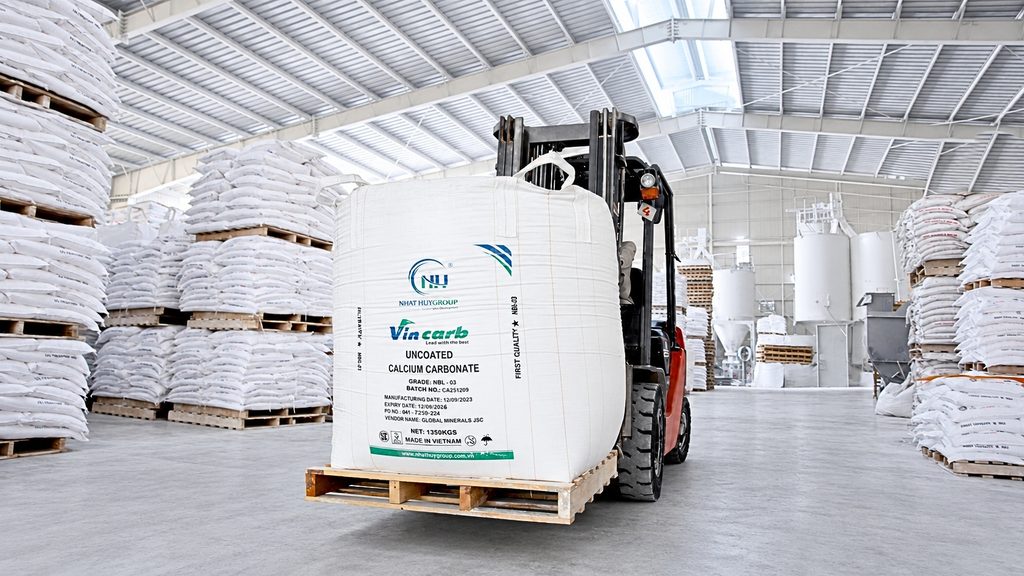
Ready to optimize your formulation costs? Contact us today to discuss your specific paint system and request a customized Technical Data Sheet (TDS) and a free lab sample for your R&D trials.